GCC, NOT EVERYTHING IS MATERIAL
Posted on LinkedIn on November 5, 2026
One of the most common mistakes in ESG reporting: trying to report on everything instead of material topics.
For most GCC companies, many ESG topics are either not applicable or not significant enough to warrant dedicated disclosure.
Reporting on irrelevant topics does not make your ESG program more credible. It makes it less focused and signals that you have not done the thinking.
Here is a practical four-step process for deciding what IS material for your business. It uses double materiality: two lenses, not one.
💼 STEP 1: BUILD YOUR LONGLIST
Start with a broad universe of potential ESG topics.
The GRI Standards, your sector's typical disclosure practice, and your regulatory environment (national vision programs, environmental regulators, labor authorities, and data protection law) will together surface 30-plus potential topics. That is your starting point.
💼 STEP 2: SCORE IMPACT MATERIALITY
For each topic, ask: how significant is our actual or potential impact on people, the environment, or the economy?
Score 1 to 5. Be honest. For example, an industrial manufacturer could score high on waste and low on deforestation.
💼 STEP 3: SCORE FINANCIAL MATERIALITY
For each topic, ask: how could this topic affect our business? Think costs, revenue, customer contracts, supply chain, and access to finance.
Score 1 to 5. Use evidence, not assumptions. What are your customers asking about in their supplier questionnaires? What does your bank's ESG request cover? What do your regulators require?
💼 STEP 4: PLOT AND PRIORITISE
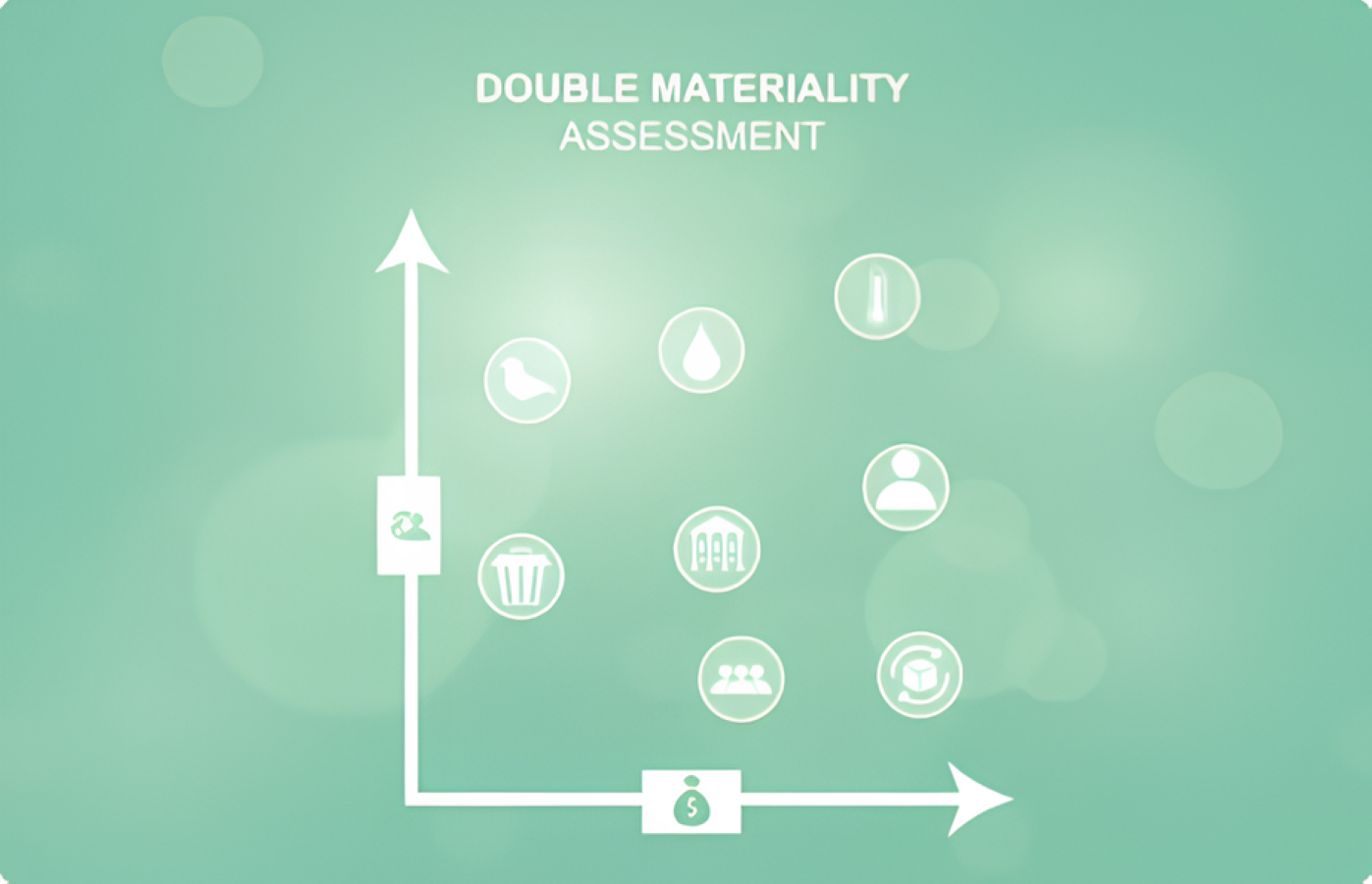
Map each topic on a 2-axis matrix:
X axis: financial materiality
Y axis: impact materiality
A topic that scores high on either axis is material.
A topic that scores high on both is a priority. Report on those. Set targets on those. Build systems to track those.
STAKEHOLDER INPUT IS NOT A THIRD AXIS. It is the evidence behind both scores: ask employees, customers, lenders, regulators, and communities, and document how their views shaped each score.
The goal is a focused list that you can manage, track, explain, and market. Not a lengthy document that nobody reads.
Have you run a formal materiality assessment? What surprised you about the results?#ESGReporting #GHGInventory #Sustainability #DoubleMateriality #GCC #MRVer #Verification #Assurance